
Inversion Therapy Benefits: Can Hanging Upside Down Help Relieve Back Pain?
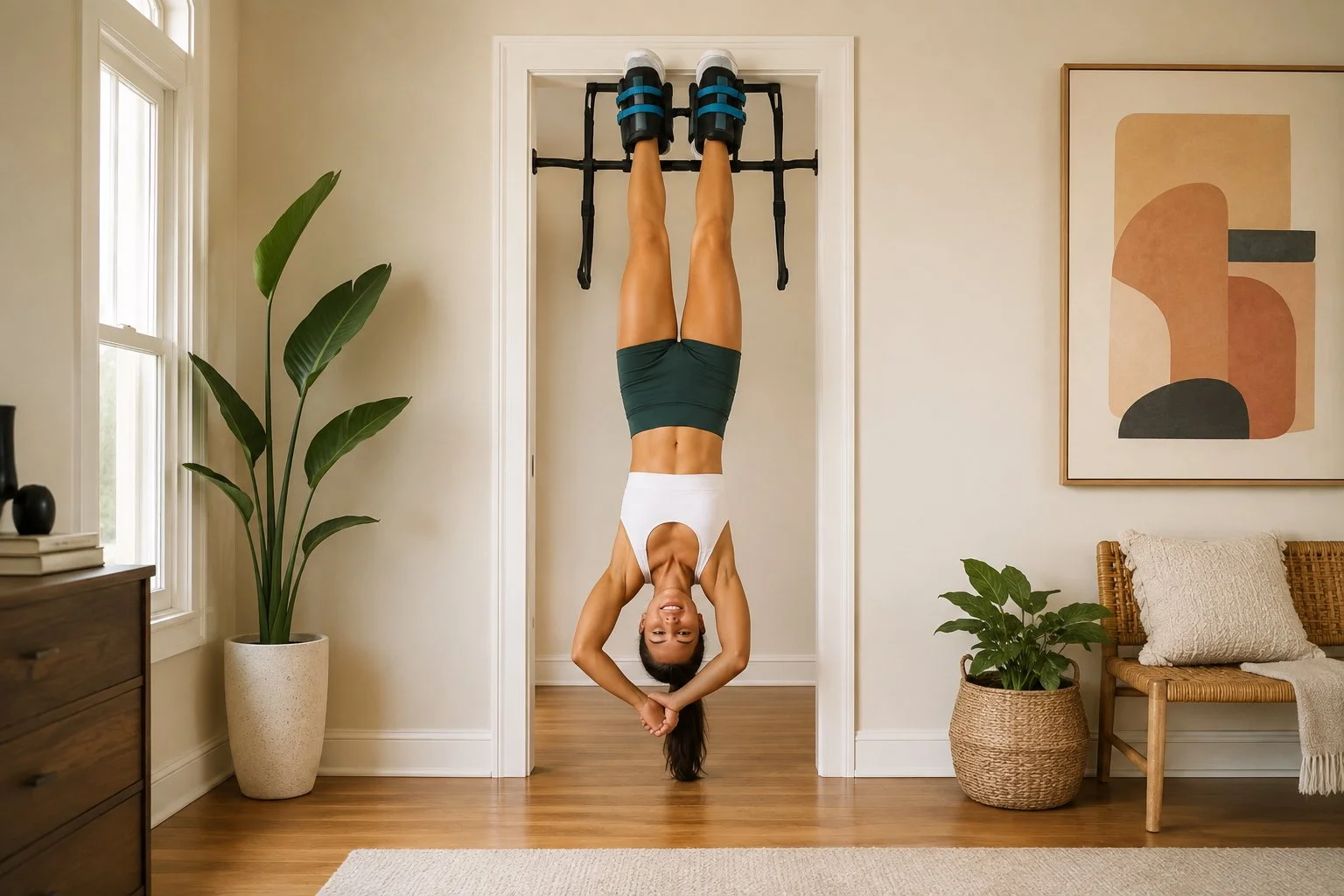
Inversion Therapy Benefits
What if I told you that one simple addition to my fitness routine helped relieve chronic neck discomfort, improved my posture, and even made me stand a little taller?
It sounds like a miracle product, but it isn't. It's called inversion therapy.
I've incorporated inversion therapy into my training for years, and while it isn't a cure-all, I've found it to be an incredibly valuable tool for spinal decompression, back pain relief, recovery, and core training. Whether you're dealing with a stiff back after long hours at a desk or looking for ways to reduce the wear and tear that heavy lifting places on your spine, inversion therapy may be worth considering.
What Is Inversion Therapy?
Inversion therapy is exactly what it sounds like—placing your body in an upside-down position so gravity temporarily reduces the compressive forces placed on your spine.
There are two common ways to perform inversion therapy safely:
Inversion Table: A padded table that allows you to control your angle of inversion, making it the best option for beginners.
Gravity Boots: Boots that attach to a pull-up bar, allowing you to hang completely upside down. They're less expensive, highly portable, and my personal preference for experienced users.
Regardless of which method you choose, the primary goal is the same: allowing the spine to decompress.
How Inversion Therapy Works
Throughout the day, gravity continuously compresses your spine. Heavy weight training, prolonged sitting, carrying backpacks, and simply getting older all contribute to this natural compression.
The discs between your vertebrae act as shock absorbers, but years of compression can contribute to stiffness, reduced mobility, and discomfort. Inversion temporarily creates space between the vertebrae, helping reduce pressure placed on the spinal discs and surrounding structures.
While inversion therapy isn't a substitute for proper medical care, many people find it provides temporary relief from everyday spinal compression.
Inversion Therapy Benefits for Back and Neck Pain
One of the biggest reasons people try inversion therapy is to relieve neck and back discomfort.
Spending just 5–10 minutes inverted a few times each week may help reduce pressure on the spine and improve how your back feels after long workdays or demanding workouts.
Personally, I found inversion therapy especially valuable during periods of heavy training when my spine was constantly under load from squats, deadlifts, and overhead pressing.
If you have a history of recurring back tightness or neck stiffness, inversion therapy can also become part of your long-term recovery routine alongside proper mobility work, strength training, and good lifting mechanics.
Can Inversion Therapy Make You Taller?
One of the most common questions I get is whether inversion therapy can actually make you taller.
The answer is a little more nuanced.
Your skeleton isn't growing, but spinal decompression can temporarily restore some of the height that naturally disappears throughout the day as your discs compress under gravity. Many people measure slightly taller immediately after inversion because the spine has been temporarily elongated.
I personally noticed a measurable difference after consistently incorporating inversion into my routine. In fact, in my first year of using gravity boots regularly I was a full inch taller!
Recovery Benefits for Athletes
One benefit that often gets overlooked is recovery.
After intense weight training or conditioning sessions, inversion can be an excellent way to simply unload the spine after placing it under significant compression.
Many lifters appreciate how their lower back feels after several minutes on an inversion table or hanging from gravity boots. While research is still evolving, many athletes—including myself—find inversion therapy to be a useful recovery tool when combined with proper sleep, nutrition, and mobility work.
Advanced Core Training with Gravity Boots
One of my favorite uses for gravity boots has nothing to do with spinal decompression.
They create one of the most challenging abdominal workouts you'll ever experience.
Performing inverted crunches and sit-ups forces your core to stabilize your entire body while working through a larger range of motion than traditional floor exercises. These movements require significant control, so they're best suited for experienced exercisers.
If you're new to gravity boots, begin slowly and focus on perfect technique before progressing.
Beginner Inversion Core Workout
3 sets × 10 Inverted Crunches
3 sets × 5 Inverted Sit-Ups
Advanced Inversion Core Workout
4 sets × 15 Inverted Sit-Ups
4 sets × 12 Inverted Crunches
3 sets × 18 Inverted Oblique Crunches per side
Remember to move slowly and under complete control. If you lose control while inverted, the exercise quickly becomes unsafe.
Who Should Avoid Inversion Therapy?
Although inversion therapy can be beneficial for many healthy adults, it isn't appropriate for everyone.
Avoid inversion therapy—or speak with your physician first—if you have:
Uncontrolled high blood pressure
Glaucoma or serious eye conditions
Heart disease
Certain spinal conditions or recent spinal surgery
Pregnancy
Balance disorders or conditions that make inversion unsafe
When in doubt, consult your healthcare provider before beginning inversion therapy.
Final Thoughts
Inversion therapy has been one of my favorite recovery tools throughout my training career. While it isn't a miracle cure, it can be an excellent addition to a well-rounded fitness program by helping reduce spinal compression, improve recovery, and provide a unique way to challenge your core.
Whether you choose an inversion table or a pair of gravity boots, start gradually, stay consistent, and pay attention to how your body responds.
For me, it's been a worthwhile investment in long-term spinal health—and one I'll continue using for years to come.
DISLAIMER: This article is for educational purposes only and is not intended to replace medical advice. Consult with a qualified healthcare professional before beginning inversion therapy, especially if you have any existing health conditions, injuries, or concerns.
